Desalination of water sources with high salt concentrations using EcoGreen
Why?
In hydroponic cultivation under glass, irrigation water is recirculated and reused at a high frequency. The recirculation of this water – also known as drain water after it has passed through the plants – causes certain elements (such as sodium and chloride), which are absorbed less readily by the plants, to accumulate. This creates an imbalance in the nutrient composition of the irrigation water. When these concentrations become too high, the drain water can no longer be reused and is discharged as waste water. The use of external water sources during periods of increasing drought is also being considered in hydroponics. Certain sources are ruled out because they contain high concentrations of salt. Using the EcoGreen treatment plant, attempts are being made to reduce the accumulated salt concentrations in water sources so that they can be reused in cultivation.
What
How
Cost
Benefits
Attention
Description & visualization of technique
WaterFuture’s EcoGreen system uses an electrolysis membrane. This ensures that monovalent ions such as sodium and chloride, as well as potassium and nitrate, are removed from the water flow. In this way, alternative water sources with a higher salt concentration or drainage water in which sodium and chloride have accumulated could be reused in crop production.
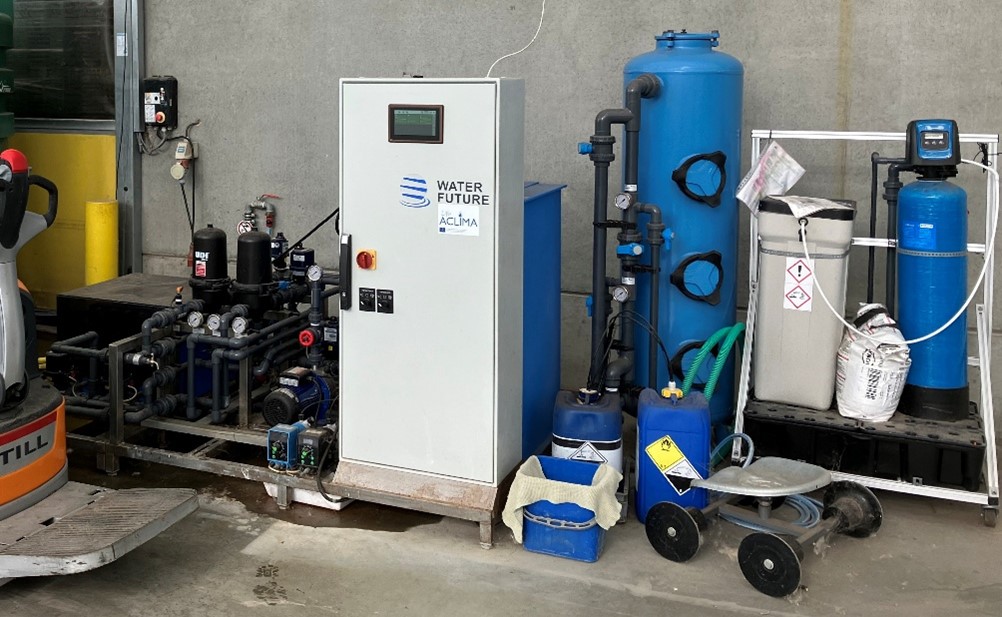
Construction (materials, technical sheet / cross-sections)
The system can be configured to operate using a water supply. The water flows through the electrolysis membranes, where the monovalent ions are attracted. These ions can pass through the membrane and end up in the waste stream. The water flow emerging from the unit contains lower concentrations of sodium, potassium, chloride and nitrate. The system is automatically backwashed to remove the ions. This backwash water is a concentrated water flow that can vary depending on the original water source. This water cannot be reused in cultivation and must therefore be collected separately and disposed of. 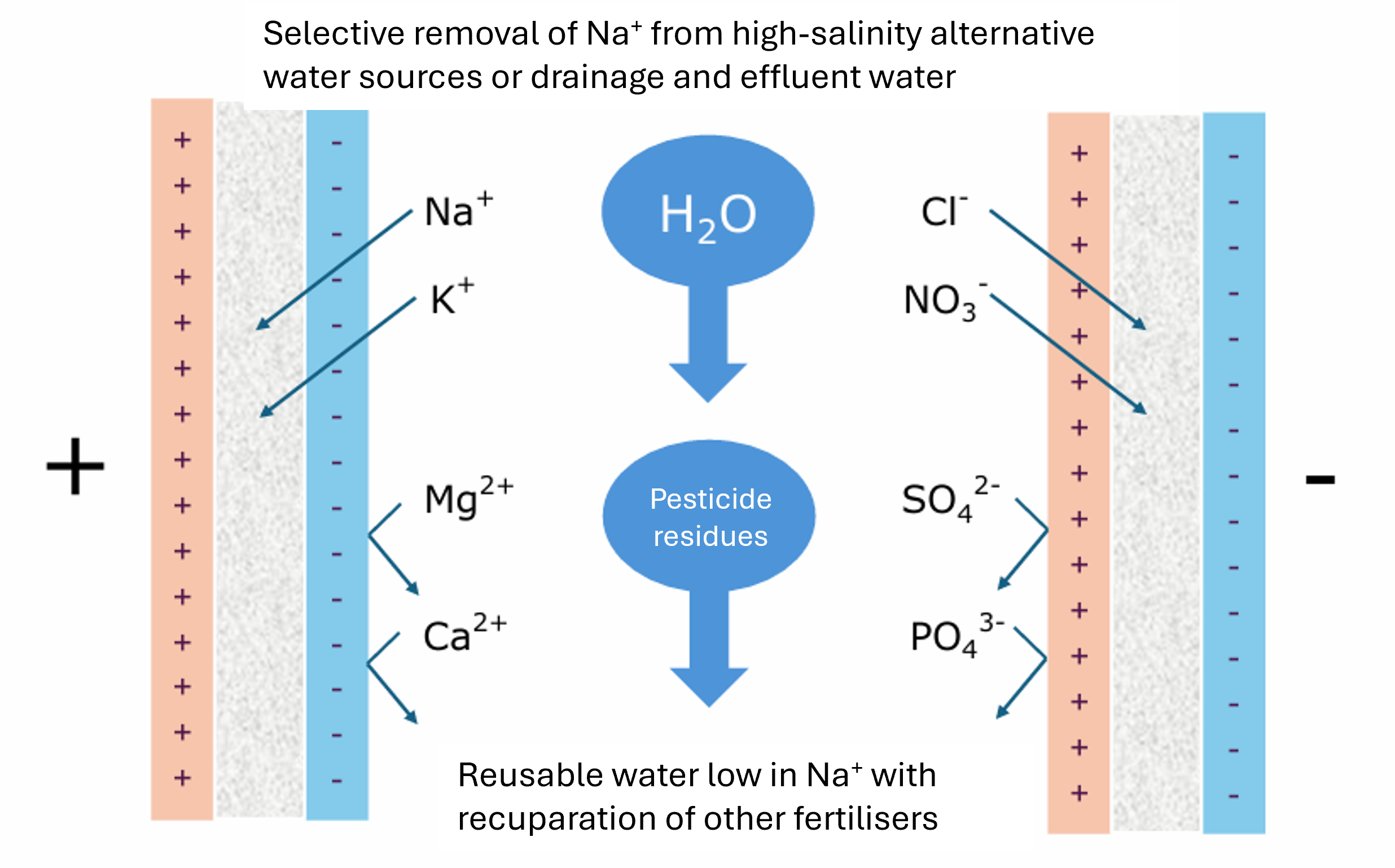
Indicative prices for construction and other costs
The cost of the installation is between € 40,000 and € 50,000. In addition, operational costs must also be taken into account, which mainly relate to energy costs and maintenance. The membranes should ideally be replaced every two years to ensure they function properly. The total maintenance cost is estimated at between € 700 and € 1,475 per year.
Economic benefits
By treating the drainage water, it can be reused in crop production. This will allow certain nutrients and water to be recovered, and should reduce the volume of drainage water discharged. Nutrient recovery is estimated at around € 1,200/ha, and water savings of around € 500–1,000 per year could be achieved (depending on the cost of water).
This unit can also be used to purify external water sources that contain high levels of salts. Once purified, these can then be used during water shortages instead of having to use tap water at 2.2 euros/m³ (PIDPA, 2025).
Sources for information & guidance
Take care with the backwash water. Depending on the source of the water to be treated, this may also contain high levels of nitrate, meaning that this effluent cannot simply be discharged. Further treatment prior to discharge or appropriate disposal of the effluent is required.
Our partners