
Drip Irrigation
Why?
Drip irrigation is an efficient form of irrigation where water is brought close to the root zone. Because less water is lost to evaporation, up to 25% irrigation water is saved compared to conventional irrigation systems.
What
How
Cost
Benefits
Attention
Description & visualization of technique
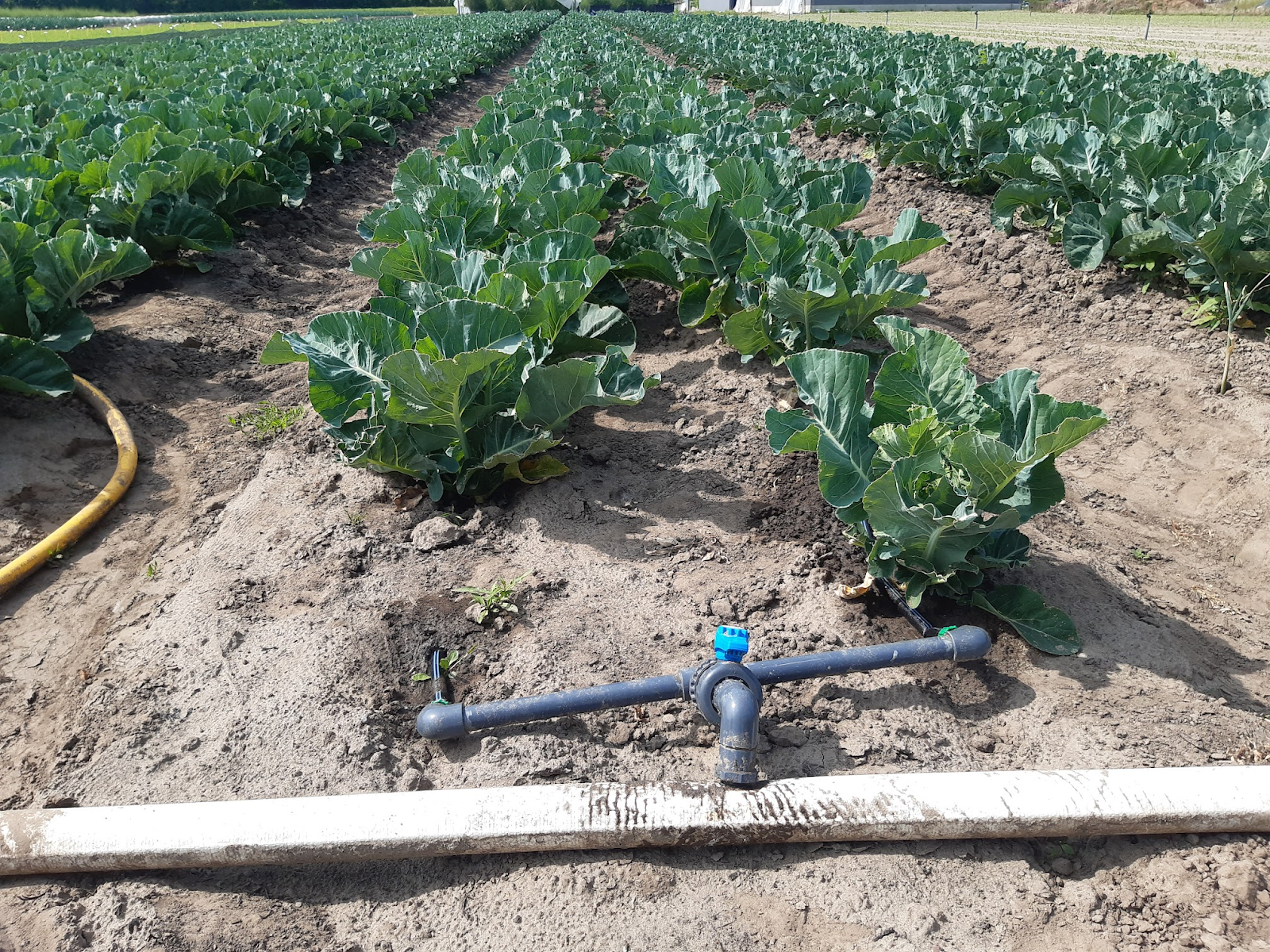
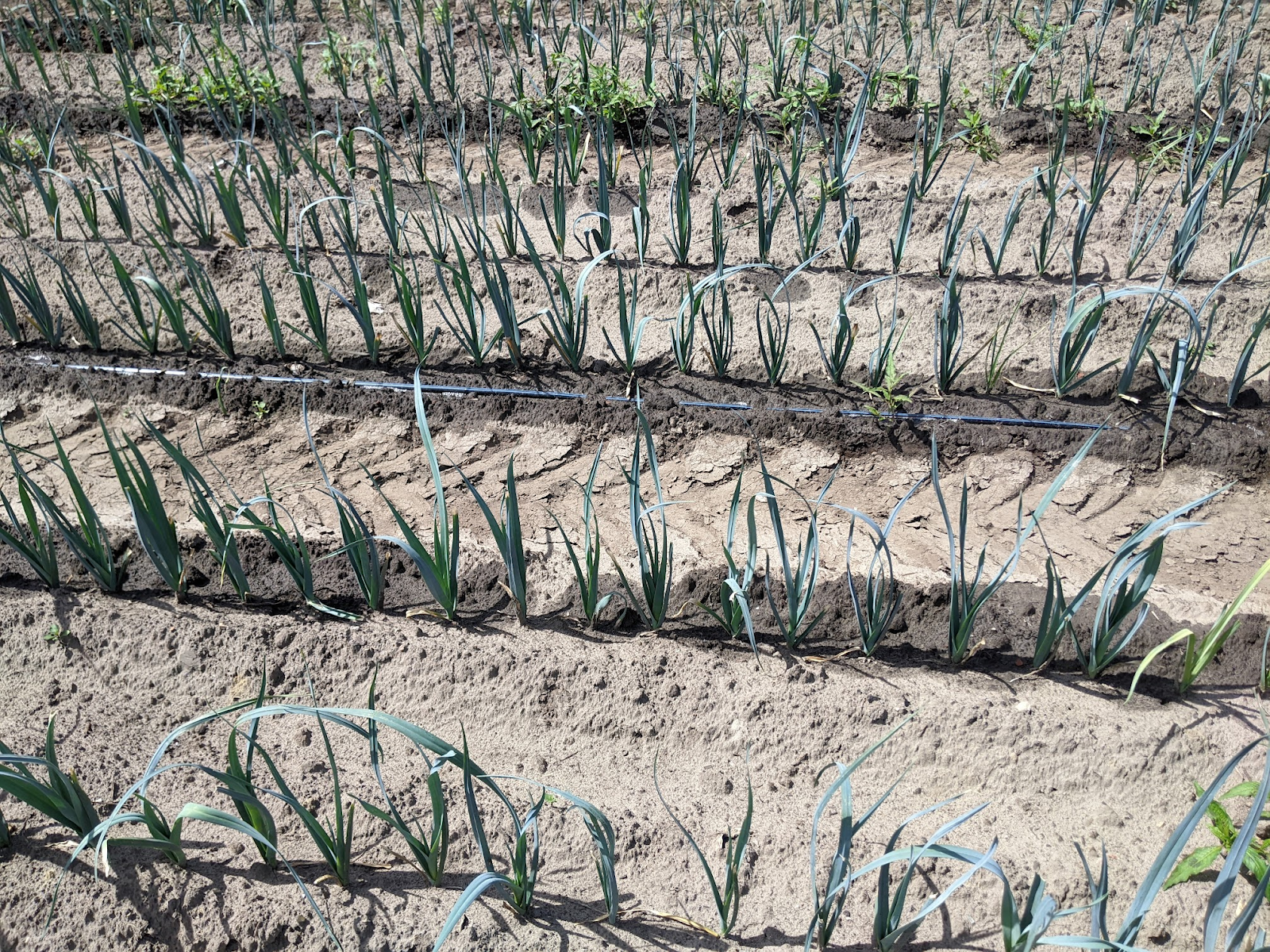
Drip irrigation brings water through pipes and perforates tubes to the plant. The system has a lower operating pressure (about 1 bar) compared to an irrigation reel or sprinklers. In greenhouse farming and orchards, this technique is very common. Mostly rigid drip tubes are installed, allowing for long term use. Another type of drip tube are the thin disposable tubes. These are more suitable for open air vegetable cropping. Downside of the thin walled tubes is the waste: after each cropping cycle, the tubes are replaced. As a result, there are reuse initiatives regarding those tubes.
Drip irrigation trials have been running for several years at several field centers in Flanders. Read more about the results of the trials in celery, cauliflower, leeks and chicory during the 2020 growing season in the Proeftuinnieuws article at the useful links.
Construction (materials, technical sheet / cross-sections)
There are different types of drip hoses. The most common diameter is 16mm. The distances between drippers vary from 10cm, 20cm, 30cm, 50cm… Furthermore, there are different wall thicknesses (6,8,10 mil) that affect the rigidity and firmness of the hose. Some manufacturers also offer pressure compensated strokes to increase release and uniformity. These are recommended for sloping plots or long distances. The best-known drip hoses in horticulture are Rivulus, Toro or Netafim brand.
The placement of the drip hose in relation to the plant row also affects the efficiency of irrigation. They can be placed above ground or below ground, between or within the row. In general, the closer to the root zone, the better. For row spacing up to 40cm, 1 hose per 2 rows can be provided. to reduce costs. At greater distances, it depends on the crop.
The hoses can be placed deep or shallow. shallow hoses are located at a few cm and mainly prevent wind and wildlife damage. Deeper hoses lie 10 to 20cm deep. These are more difficult to remove from the field afterwards, however. Underground placement of the drip hoses, in addition to more efficient watering, also has the advantage of preventing damage from animals or from field operations – such as hoeing.
Indicative prices for construction and other costs
A reel of thin walled drip tubes cost about 150 euros (+-3000m). The price of connectors, feeding hoses, filters and such has to be added. The system is labour intensive to install, this is countered by labour savings during the growing season. Especially in dry years, the overall labour wwill be lower with drip irrigation.
The Soil Service of Belgium calculated that from 150 mm of irrigation volume, drip irrigation turns out cheaper than reel irrigation. However, this figure is highly farm-specific. With different crops, water sources, surface areas and shapes of plots, this figure may vary. Drip irrigation can serve more area at a time and can operate at smaller flow rates than a reel. Drip irrigation can also be used in all weather conditions.
Ecological benefits
Water savings of 0-25% compared to overhead irrigation.
Our partners






