Reduction of Discharge Flow Through the Use of Nano-Ultrafiltration in Combination with H₂O₂
Why?
In modern greenhouse horticulture, drain water is recirculated as much as possible to save water and nutrients. However, in hydroponic cultivation systems, such as lettuce cultivation on mobile gutter systems (MGS), this drain water can become contaminated with plant-pathogenic microorganisms. Important examples include Olpidium spp., a soil fungus capable of transmitting viruses such as lettuce ring necrosis virus, lettuce big-vein virus, and tobacco necrosis virus, Phytophthora cryptogea, which causes wilting, and Pythium spp.
The LIFE ACLIMA project therefore investigated the combination of:
- Nano-ultrafiltration (NUF)
- Controlled dosing of hydrogen peroxide (H₂O₂)
Objectives of this technique:
- Enable the safe reuse of drain water;
- Limit the spread of plant pathogens;
- Reduce water consumption;
- Strengthen circular water use in greenhouse horticulture.
What
How
Cost
Benefits
Attention
Description & visualization of technique
The technique combines two treatment steps:
- Nano-Ultrafiltration (NUF)
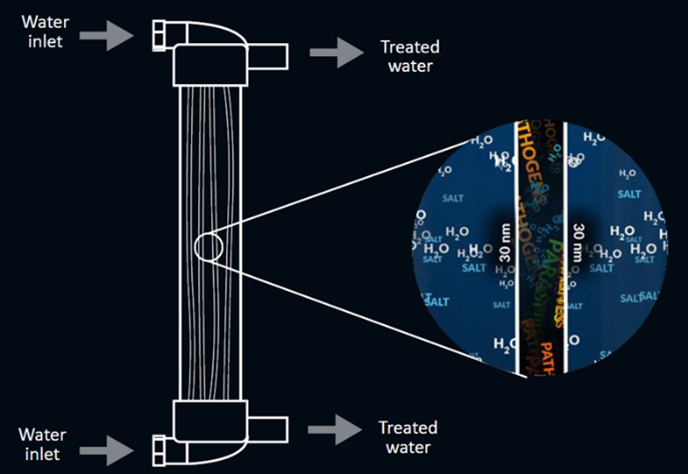
In nano-ultrafiltration, drain water is passed through very fine membranes with a cutoff of approximately 20–30 nm.
This physically removes:
- Fungal spores,
- Bacteria,
- Organic particles,
- Certain viruses
from the water.
- Controlled Dosing of Hydrogen Peroxide
After filtration, a low concentration of hydrogen peroxide (10 ppm) is continuously added via an automatic dosing unit equipped with sensors.
Hydrogen peroxide:
- Oxidizes organic material;
- Inactivates microorganisms;
- Helps limit biofilm formation;
- Ensures a more stable microbiological water quality.
The combination of both techniques provides:
- Mechanical removal through membranes;
- Additional chemical disinfection.
Construction (materials, technical sheet / cross-sections)
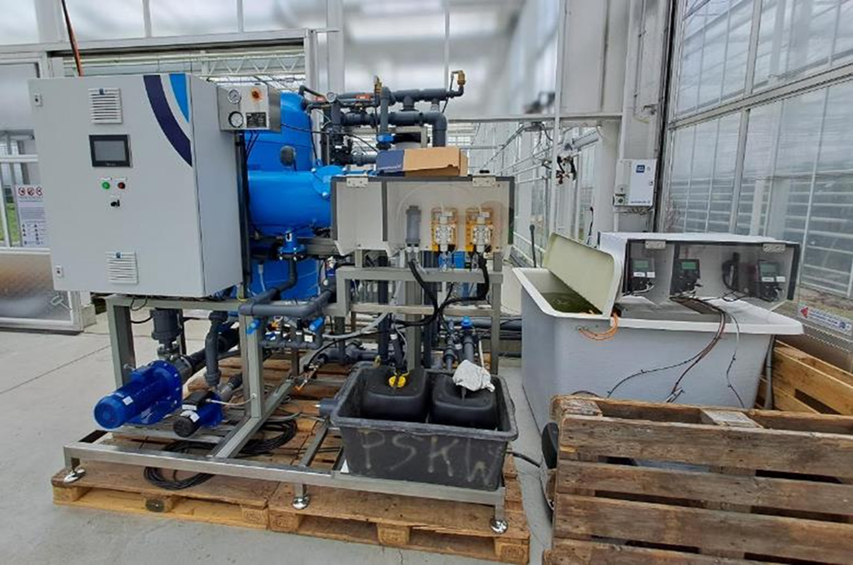
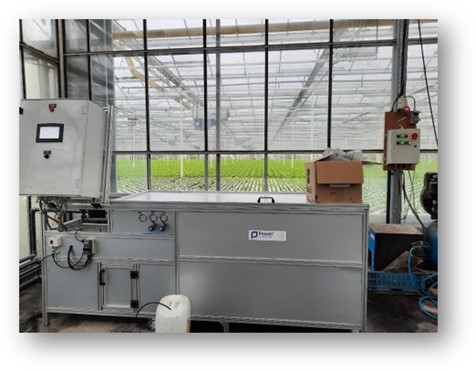
The installation is generally placed in technical rooms or near water storage buffers, allowing easy integration into the company’s existing water circuit. In many cases, the system is integrated into the existing irrigation infrastructure, enabling the treated drain water to be directly reused for irrigation. As a result, the spatial impact remains limited and the technology can be relatively easily implemented within existing greenhouse horticulture companies.
|
Component |
Specification |
|
Membrane cutoff |
20–30 nm |
|
Pilot installation flow rate |
Depending on system size and company requirements: |
|
± 2 m³/hour |
|
|
± 6 m³/hour |
|
|
± 10 m³/hour |
|
|
± 13 m³/hour |
|
|
± 26 m³/hour |
|
|
± 42 m³/hour |
|
|
± 50 m³/hour … |
|
|
H₂O₂ dosage |
10 ppm |
|
Application |
Hydroponic cultivation (fruit vegetables, leafy vegetables, cabbages, herbs, flowers, etc.) |
Maintenance
Management of the installation consists of a combination of periodic maintenance and continuous monitoring of water quality. To guarantee proper system operation, the membranes of the nano-ultrafiltration installation must be cleaned regularly to prevent clogging and performance loss. In addition, the sensors must be checked and calibrated to ensure accurate monitoring of the hydrogen peroxide concentration. The dosing pump also requires regular calibration to maintain stable hydrogen peroxide dosing. Furthermore, it is important to safely and correctly manage hydrogen peroxide storage and to periodically flush the pipelines to limit deposits and biofilm formation.
In addition to maintenance, continuous monitoring of several water quality parameters is necessary. Important parameters include:
- The microbiological quality of the water,
- The presence of Olpidium spp. or other pathogens,
- The concentration of hydrogen peroxide,
- The system flow rate and pressure,
- Possible biofilm formation in pipelines and reservoirs.
By monitoring these parameters regularly, the efficiency of the disinfection process can be controlled and adjusted where necessary.
Indicative prices for construction and other costs
The cost of an installation with nano-ultrafiltration and controlled hydrogen peroxide dosing strongly depends on the type of company, the scale of operation, and the required system flow rate. The level of automation, storage capacity, and desired water quality also influence the total investment cost.
As a result, the price of a NUF system may vary between approximately €25.000 and €160.000. In addition to the installation costs, operational costs such as energy consumption, membrane maintenance, replacement of components, and hydrogen peroxide consumption should also be taken into account.
Relevant subsidy channels
For investments in water reuse and water treatment systems within greenhouse horticulture, support can be obtained through the VLIF scheme (Flemish Agricultural Investment Fund). Depending on the type of investment and the innovative value of the project, the support rate may amount to approximately 40–50% of eligible investment costs.
For innovative projects within the agricultural sector, installations, machinery, automation, and guidance costs are often partially supported through VLIF innovation support.
Economic benefits
This water technology can provide economic benefits in several areas. Through the reuse of drain water, water consumption is significantly reduced, making companies less dependent on external water sources such as tap water or groundwater.
In addition, the recovery of drain water allows nutrients to be reused as well, resulting in lower fertilizer losses and more efficient nutrient use within the cultivation system.
An additional advantage is the reduction of discharge flows. Because more water can be internally recirculated, smaller volumes of water need to be discharged, which lowers discharge costs.
Moreover, treatment of drain water can contribute to lower disease pressure in recirculation systems, thereby reducing the risk of spreading plant pathogens and limiting crop losses.
Relevant legislation, permits
When applying nano-ultrafiltration in combination with hydrogen peroxide, several legal and practical considerations must be taken into account. The installation must comply with VLAREM legislation concerning water recirculation and discharge standards.
In addition, safe storage and handling of hydrogen peroxide are important, as it is a strongly oxidative product that is also subject to occupational safety regulations. Depending on the application, phytosanitary regulations may also apply.
Sources for information & guidance
From a practical perspective, this water technology also requires careful management. Correct hydrogen peroxide dosing is crucial, as excessively high concentrations may cause damage to plant roots.
Furthermore, the membranes of the nano-ultrafiltration system are sensitive to fouling, making regular cleaning necessary to maintain proper operation.
Finally, biofilm formation in pipelines and reservoirs remains an important point of attention within recirculation systems.
Our partners