
Treatment and reuse of cleaning water from poultry
Why?
In Flanders, the agriculture and horticulture sector faces a growing challenge: the demand for water continues to increase, while its availability is decreasing. This challenge is exacerbated by climate change, stricter regulations and pressure on natural water resources such as groundwater. To address these issues, the Life ACLIMA project was launched. Through five thematic pillars, this project offers concrete solutions to make water use more sustainable in the sector.
One of these pillars is the use of alternative water sources at the farm level.
Within this pillar, the Experimental Poultry Centre is investigating the possibility of reusing rinsing or cleaning water from broiler houses. The context in which this research is taking place is that of a typical broiler farm that works with a 7-week system, in which the houses are intensively cleaned with water during downtime. The resulting cleaning water still contains organic residues and is legally considered manure (type 2).
The concrete objective is to investigate whether and how cleaning water from cleaning broiler houses can be treated and reused on the farm itself. This should be done in a sustainable, economical and practically feasible way. By valorizing this water stream as an alternative source, the aim is to help poultry farmers to:
- reduce their water consumption,
- become less dependent on groundwater or tap water,
- and better prepare for future regulations and increasing permitting requirements for water use
Problem Statement:
Poultry farms use large amounts of water to clean their houses, leading to significant pressure on their water consumption. At the same time, they will face stricter regulations around groundwater abstraction and re-licensing in the future, making access to traditional water sources (including groundwater) uncertain. Although the cleaning water used contains relatively low concentrations of nitrogen and phosphorus, it is still legally classified as manure. As a result, there are requirements for storage and the runoff regulations apply.
This combination of increasing water pressure, limited access to groundwater and strict regulations surrounding cleaning water is prompting poultry farmers to consider alternative solutions. The challenge, then, is: In what way can poultry farms treat and reuse their cleaning water on their own farms in a technically and economically feasible way that reduces their dependence on scarce water resources while meeting applicable environmental regulations?
What
How
Cost
Benefits
Attention
Description & visualization of technique
To purify the cleaning water, a plant has been installed at the Experimental Poultry Centre next to the broiler house. The water treatment plant is housed entirely in a 20-ft container and includes four functional compartments:
| Compartment: | Functionality: |
| Bio-compartment | Aerobic biological purification via nitrification |
| Anoxic compartment | Anaerobic denitrification of nitrate to nitrogen gas |
| Sludge Buffer | Storage of excess biosludge and recovery of water |
| Technical room | Process control, aeration pumps and measuring equipment |
In addition, (underground) storage is provided to store the untreated (influent) and treated cleaning water (effluent) from at least 1 cleaning operation.
A schematic overview of the process (Diagram 1 and Figure 2) shows the sequence of compartments and the direction of water flows, from collection to reuse.
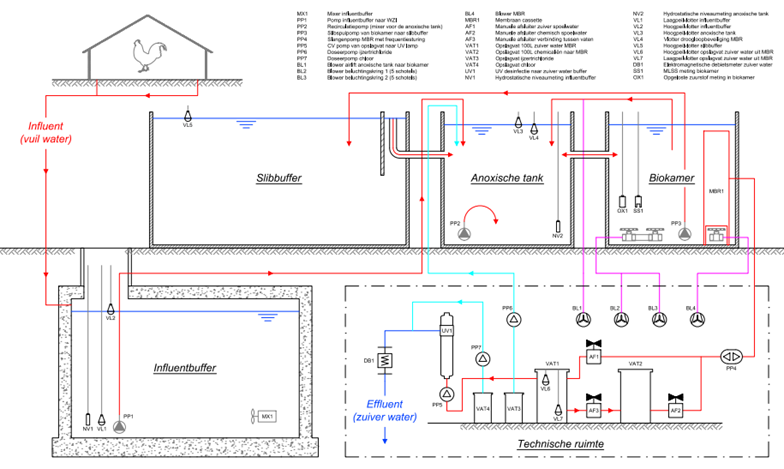
Scheme 1: Schematic overview of the structure of the water treatment system.
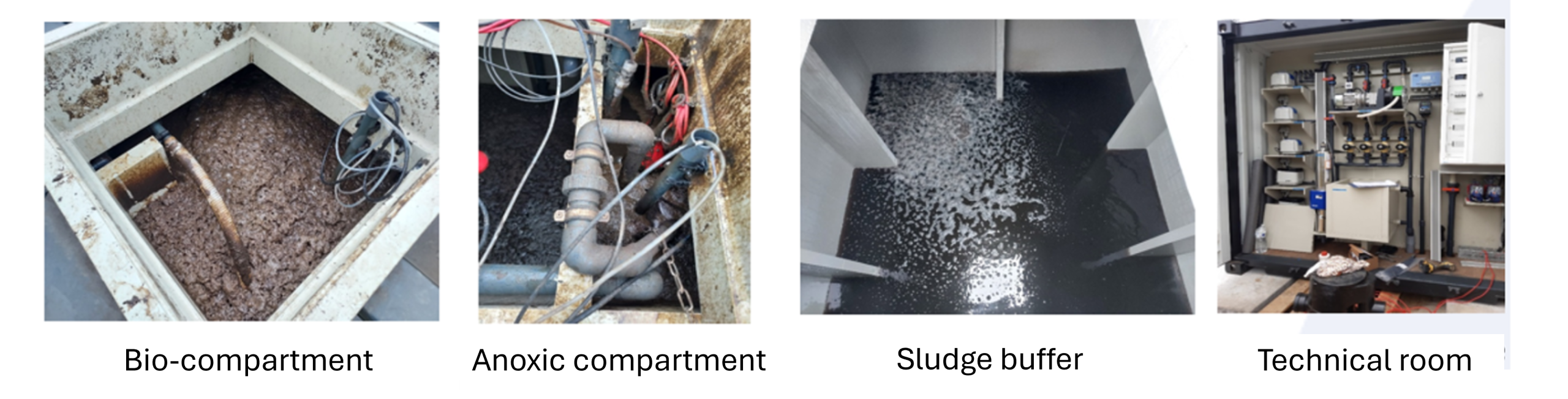
Figure 2: Overview of the different compartments in the purification container.
Construction (materials, technical sheet / cross-sections)
The technology used is a membrane bioreactor (MBR), which combines biological treatment with ultrafiltration through a membrane filter. This process makes it possible to purify cleaning water from poultry houses in such a way that it becomes reusable for new cleanings.
Process flow:
- Influent buffer (underground)
Cleaning water from barn cleaning is collected in underground tanks. A pump brings the water to the treatment plant in the container. - Bio-compartment (nitrification)
In an oxygen-rich environment, aerobic bacteria convert ammonium to nitrate. Aeration takes place via discontinuous bubble aerators.
At the same time, permeate (purified water) is extracted with an MBR cassette. - Anoxic compartment (denitrification)
In this chamber, oxygen levels are low. Anaerobic bacteria convert nitrate to inert nitrogen gas (N₂). Phosphate is removed by the addition of iron salts (FeSO₄ or FeCl₃) and discharged through the sludge. - Sludge Buffer
Excess sludge from the bio-compartment is collected. The aqueous topsoil can possibly be reused. The thickened sludge is disposed of externally. - Technical room
This contains the process control system, aeration pumps, measuring equipment and an error detection system for automatic adjustment. - Post-treatment of the effluent
To prevent a regrowth of microorganisms during the storage of the purified cleaning water (effluent) before the next cleaning, a post-treatment with peroxides or UV can be performed.
This innovative treatment setup allows us to reuse cleaning water in a circular way on the farm itself. The system is modular, compact, smartly controlled and designed to operate completely autonomously.
Standards drinking water for poultry:
To use water for cleaning poultry houses, the legal standards and quality standards of specifications such as IKB/Belplume must be followed.
Belplume vzw is een organisatie die zorgt voor de uitbouw van een integraal kwaliteitsbeheersysteem voor pluimvee, heeft normen opgesteld voor een veilig gebruik van grond-, leiding- en hemelwater. In het lastenboek wordt vermeld met welke frequentie chemische en bacteriologische wateranalyses moeten uitgevoerd worden en aan welke eisen het water moet voldoen om het te mogen gebruiken als reinigingswater. (zie tabel 3).
| Microbiological parameters | Standard |
| Total germ count at 22° and 37°C. | Max. 100.000 cfu per ml. |
| Total E. Coli | Max. 1.000 cfu per 100 ml. |
| Fecal streptococci and intestinal enterococci | Absent in 100 ml. |
| Yeasts and fungi | Max. 10.000 per ml. |
| Chemical parameters | Standard |
| pH | 4-9 |
| Iron (Fe) | <= 2.5 mg/l |
| Hardness | Max. 20°D |
| Nitrite | <= 1.0 mg/l |
| Sodium (Na) | < 200 mg/l |
| Sulfate | < 200 mg/l |
Table 3: Standards for microbiological and chemical parameters of cleaning water when used for barn cleaning (sampling at the water source). Standards are applicable within Belplume’s quality system (Appendix 29 of the manual).
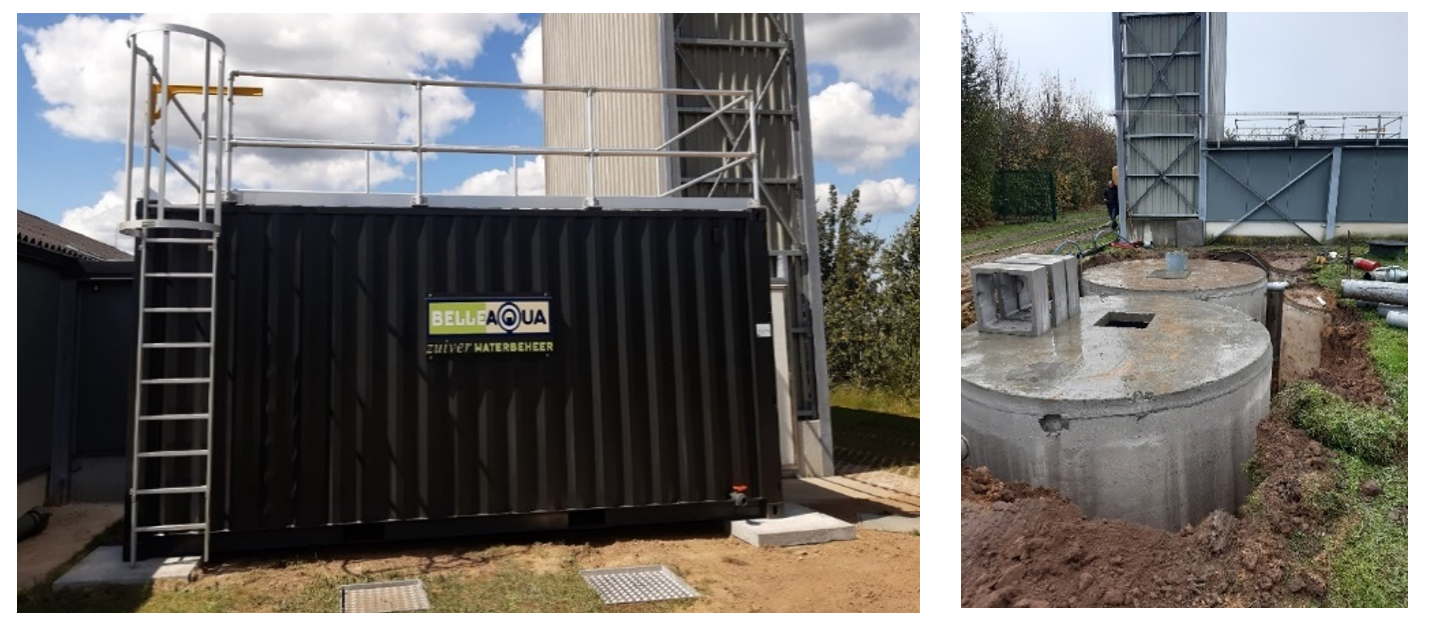
Photo 4: Container setup for cleaning water treatment with underground storage
Indicative prices for construction and other costs
To get an idea of the cost of purifying the cleaning water, a business case was specifically developed (example in Chart 5). The costs are divided into the 2 parts:
- Installation costs (Capex – Capital Expenditures).
- Costs related to the operation and maintenance of the plant (Opex – Operating Expenditures).
In addition to these 2 cost items, the following parameters are also taken into account:
- Installation costs are depreciated over a period of 10 years. Afterwards, only operating costs are charged.
In addition, the business case includes a number of other variables that depend on the specific business situation:
- Number of m³ of cleaning water to be treated per year.
- Destination of treated cleaning water: reuse or discharge
- Actual cost of original reuse or disposal of untreated cleaning water
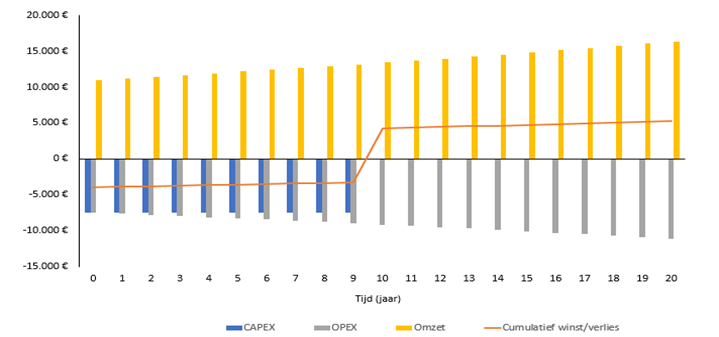
Chart 5: Example of an economic calculation of a treatment plant based on CAPEX, OPEX and company-specific variables.
Relevant subsidy channels
Possible grant channels (VLIF, …)
Ecological benefits
As the cleaning water is catalogued as manure, the specific spreading regulation applies in Flanders. This means that this cleaning water cannot legally be spread during the restriction period (± 5 months). By reusing the purified clenaing water for cleaning the stables, only a storage capacity is needed for the amount of water for 1 production round instead of 3 to 4 rounds.
This also significantly reduces the use of groundwater or tap water at the farm level. ± 75% of the water needed for a barn cleaning can be recaptured in the influent wells and then treated.
With this treatment system, other water streams on the farm can also be purified such as condensate water from a heat exchanger, cleaning water from an air scrubber and even farmyard runoff and silage effluent
The tables below list some examples of water flows originating from agricultural activities. The water flows are divided into two groups (= “low” and “high” load) based on the load level of a number of parameters (Table 6).
| Water flow from ‘agriculture’ | Dimensions | |
| Parameter influent | Low load | High load |
| BOD (mg/l) | 564 | 1581 |
| COD (mg/l) | 1600 | 4900 |
| Suspended matter (mg/l) | 130 | 798 |
| Total nitrogen (mg/l) | 82 | 284 |
| Total phosphorus (mg/l) | 22 | 53 |
Table 6: Summary of nutrient loading of water streams from agricultural activities (BOD = Biological Oxygen Demand, COD = Chemical Oxygen Demand).
Based on the load level, the flow rate to be treated (m³/day) and the effluent target values (Table 7), the volume of the buffer tank and filtration in the container can be determined.
| Effluent parameter | Target value |
| BOD (mg/l) | <25 |
| COD (mg/l) | <125 |
| Suspended matter (mg/l) | <35 |
| Total nitrogen (mg/l) | <15 |
| Total phosphorus (mg/l) | <2 |
| Pathogens | absent |
Table 7: Target value of different effluent parameters.
Relevant legislation, permits
- Cleaning water from poultry houses is considered a manure (type 2 fertilizer) under Flemish environmental legislation (VLAREM) and falls under the same regulations as pig and cattle manure despite a very different composition.
- Consequently, the biological purification of cleaning water on one’s own (poultry) farm is also considered “manure processing” and should therefore also be included in the farm’s environmental permit.
- If cleaning water from multiple locations or farms would be brought to 1 location/poultry farm for treatment, additional regulations (e.g. transport of manure, etc.) would apply and additional sections and conditions would be required in the permit.
Our partners






