Reduction of Discharge Water Using Ultrasonic Waves in the Nutrient Water
Why?
In modern greenhouse horticulture, drain water is recirculated as much as possible in order to save water and nutrients. In hydroponic cultivation systems, such as lettuce cultivation on mobile gutter systems (MGS), this drain water can become contaminated with plant-pathogenic microorganisms. Important examples are Olpidium spp., a soil fungus that can spread viruses such as lettuce big-vein virus, blister leaf virus and tobacco necrosis virus, as well as Phytophthora cryptogea, which causes wilting, and Pythium spp.
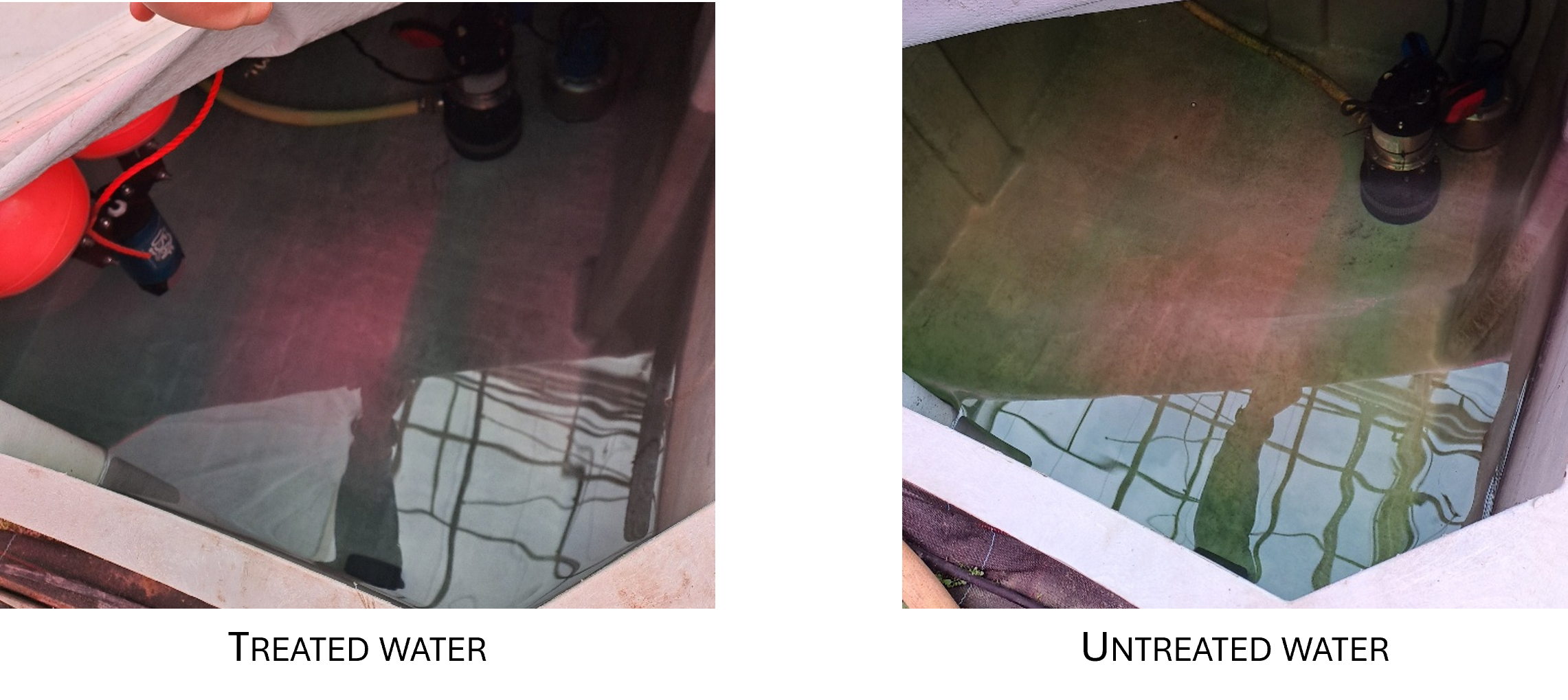
The objective of ultrasonic disinfection is to reduce pathogens in irrigation water so that the water can be safely reused without negatively affecting the crop. Research within the ACLIMA project clearly showed an effect of ultrasonic waves on green algae deposits in the nutrient water, but only a limited effect on Olpidium virulentus. Therefore, it may be better to combine ultrasonic waves with hydrogen peroxide treatment. This allows full reuse of the water in cultivation without discharge water, resulting in lower water consumption.
What
How
Cost
Benefits
Attention
Description & visualization of technique
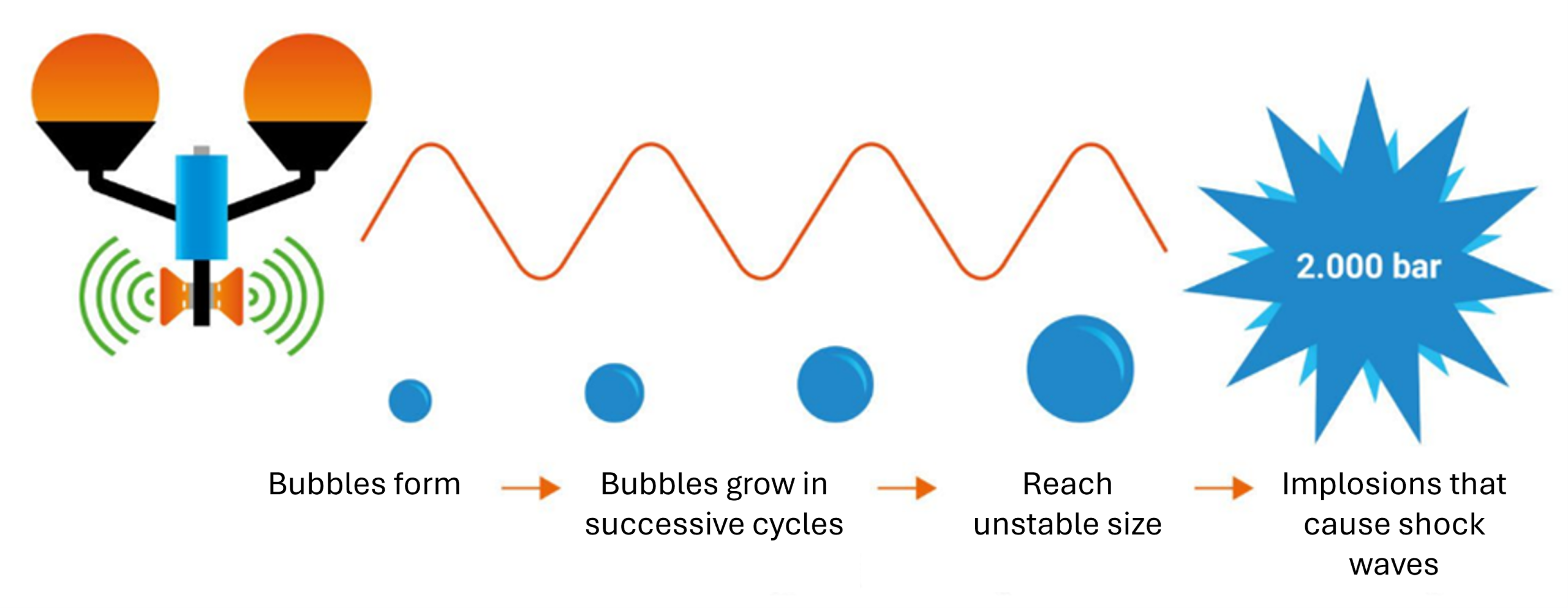
Ultrasonic disinfection uses ultrasonic sound waves to treat water. These sound waves create so-called cavitation in the water. Microscopic vapor bubbles are formed and subsequently implode.
These implosions generate very high local pressures and temperatures, causing microbial cells to become damaged or destroyed. In addition, oxygen radicals are formed, which provide an extra disinfecting effect.
Operating principle:
- Ultrasonic waves are transmitted into the water.
- Cavitation bubbles are formed.
- The bubbles implode.
- Microorganisms are damaged. The cell wall/membrane ruptures and the organisms die.
- The treated water can be reused as irrigation water.
Construction (materials, technical sheet / cross-sections)
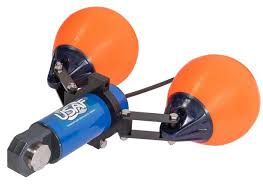
An ultrasonic system generally consists of:
- An ultrasonic generator
- Ultrasonic emitters/transducers
- A treatment chamber or pipe through which the water passes
- Electrical power supply and control system
- Optional sensors for flow rate and water quality
The installation is usually placed inside a technical room or near the irrigation system. As a result, there is little visual impact on the landscape or greenhouse environment.
Maintenance
Managing an ultrasonic disinfection system requires regular monitoring to ensure proper operation and efficient water treatment. The ultrasonic emitters should be checked regularly to verify correct functioning. In addition, pipes and reservoirs should be cleaned in time to limit the accumulation of biofilm and contamination. Flow rate and water quality must also be monitored to guarantee optimal irrigation water treatment. Furthermore, microbiological parameters should preferably be monitored in order to detect pathogens in time. Finally, periodic maintenance of the electrical components is necessary to prevent malfunctions and wear.
Indicative prices for construction and other costs
The cost of an ultrasonic disinfection system strongly depends on the size of the company, the required flow capacity, the number of ultrasonic units and the degree of automation and monitoring.
The total investment mainly consists of purchasing the ultrasonic installation and integrating it into the existing water treatment system. In addition, there are recurring costs such as electricity consumption, maintenance and replacement of parts.
Compared to some chemical disinfection techniques, ultrasonic systems often have lower operating costs because little or no chemical products are needed for water treatment.
Economic benefits
The cost of an ultrasonic disinfection system strongly depends on the size of the company, the required flow capacity, the number of ultrasonic units and the degree of automation and monitoring.
The total investment mainly consists of purchasing the ultrasonic installation and integrating it into the existing water treatment system. In addition, there are recurring costs such as electricity consumption, maintenance and replacement of parts.
Compared to some chemical disinfection techniques, ultrasonic systems often have lower operating costs because little or no chemical products are needed for water treatment.
Ecosystem services, biodiversity
Besides economic advantages, ultrasonic water treatment also offers ecological benefits. By reusing water, less pressure is placed on natural water resources. Furthermore, emissions of nutrients and plant protection products may decrease, which is beneficial for the environment. The technique contributes to a more sustainable water cycle within greenhouse horticulture and reduces the burden on surface water.
Relevant legislation, permits
When using ultrasonic disinfection for irrigation water, several legal and technical requirements must be taken into account. The quality of the treated water must comply with the applicable standards for irrigation water so that it can be safely used in cultivation. In addition, it is important that the electrical installation is correctly installed and maintained according to applicable safety standards. Finally, attention must be paid to pumps placed in water treated with ultrasonic waves. The waves may affect the seals of the pumps; therefore, it is best to treat the water without pumps or similar equipment being present.
Environmental regulations regarding water recovery and the reuse of drain water may also apply. Furthermore, attention should be paid to food safety and plant health to ensure that the treated water does not pose a risk to crops or final food production.
Our partners